

Where Do Grey Aliens Come From?

You might find it intriguing that the origins of Grey aliens spark a blend of science and speculation. Many theories propose they come from Zeta Reticuli, while others suggest they could be advanced time travelers or even interdimensional beings. Ancient texts hint at their presence in human history, but hard evidence remains elusive. What implications do these theories hold for our understanding of life beyond Earth? The answers could reshape our view of the universe.

Diverse Theories on the Origins of Grey Aliens

As you explore the mysterious world of Grey aliens, you’ll encounter a variety of theories regarding their origins.

Some believe these beings hail from Zeta Reticuli, a binary star system, based on alleged abduction accounts. Others propose they might be advanced time travelers from our own future, returning to study humanity.

Another theory suggests they’re extraterrestrial biological entities created as a result of genetic engineering by a higher civilization. Additionally, some speculate they could be interdimensional beings, existing in parallel realities.

Each theory reflects humanity’s fascination with the unknown, inviting you to question not just where they come from, but what their existence means for our understanding of life beyond Earth.

The possibilities are as intriguing as they’re diverse.

Ancient Civilizations and Their Grey Alien Connections

While many might dismiss the idea as mere fantasy, connections between ancient civilizations and Grey aliens have sparked serious debate among scholars and enthusiasts alike.

You might wonder how ancient cultures, like the Sumerians and Egyptians, depicted beings that resemble today’s Grey aliens. Some researchers argue that these depictions could reflect contact with extraterrestrial life, possibly influencing their advanced knowledge in astronomy and mathematics.

Ancient cultures like the Sumerians and Egyptians depicted beings resembling today’s Grey aliens, sparking theories of extraterrestrial contact influencing their advanced knowledge.

Others suggest that these stories served as metaphorical representations of divine beings. Speculation arises when you consider ancient texts describing “gods” descending from the sky, potentially aligning with modern Grey alien narratives.

While evidence remains inconclusive, the intriguing parallels invite you to explore whether our ancestors had experiences beyond this world, shaping their civilizations and belief systems.

Are Modern UFO Sightings Real?

What drives the fascination with modern UFO sightings? You might consider the mix of credible eyewitness accounts, technological advancements, and cultural narratives that feed this intrigue.

Numerous reports claim strange aerial phenomena, often backed by radar data and military testimonials. However, skeptics argue that many sightings can be attributed to misidentified aircraft, weather balloons, or atmospheric anomalies.

Still, the speculation remains: could some of these incidents hint at extraterrestrial life?

As you explore this topic, you’ll find that the debate often hinges on personal beliefs and the interpretation of evidence. Ultimately, while some sightings may hold merit, others could simply reflect our desire to explore the unknown and grasp at possibilities beyond our current understanding.

What Science Says About Grey Aliens?

Despite the allure of grey aliens in popular culture, scientific scrutiny often reveals a lack of concrete evidence to support their existence. While anecdotal accounts and alleged abductions capture the imagination, they frequently lack forensic validation.

Psychologists suggest that these experiences might stem from sleep paralysis or cognitive dissonance rather than extraterrestrial encounters. Furthermore, the scientific community emphasizes that without verifiable data, claims about grey aliens remain speculative.

Researchers explore the possibility of life beyond Earth, but they focus on microbial organisms rather than humanoid entities. Until we gather indisputable evidence, grey aliens will likely remain a fascinating yet unproven aspect of human mythology, illustrating the intersection of our hopes, fears, and the unknown domains of the universe.

Implications of Grey Aliens for Humanity

The fascination with grey aliens raises intriguing questions about their implications for humanity. If they exist, their advanced technology could revolutionize our understanding of science and engineering. You might wonder how their knowledge could transform medicine, potentially offering cures for diseases or insights into human biology.

On a social level, the acknowledgment of extraterrestrial life might challenge your beliefs, prompting a reevaluation of humanity’s place in the universe. Additionally, the idea of contact could lead to ethical dilemmas regarding coexistence and communication. Are we prepared to engage with another intelligent species?

The existence of grey aliens, whether real or imagined, compels you to reflect on the broader ramifications of life beyond Earth, pushing the boundaries of human thought and expectation.

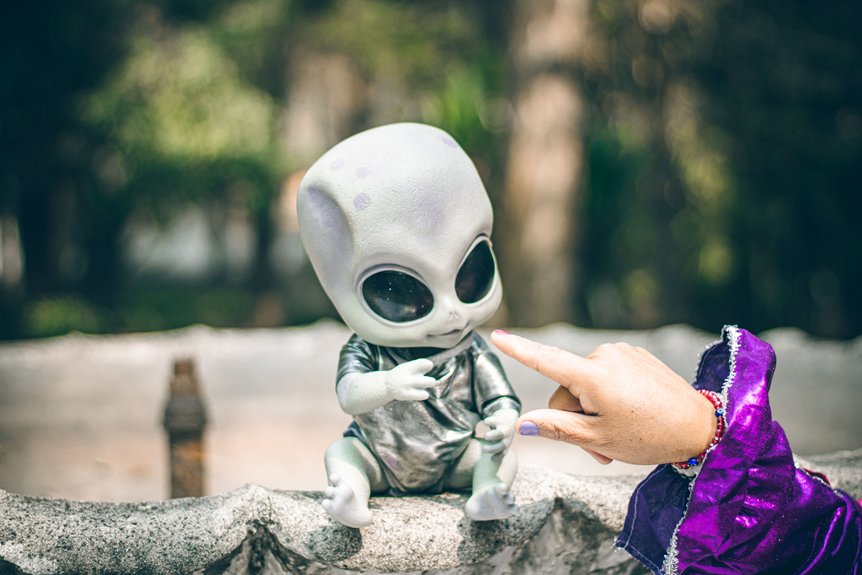
How Tall Are Grey Aliens?

When considering the height of grey aliens, you might find it intriguing that reports generally suggest they range from 3 to 4.5 feet tall. This variation raises questions about how factors like distance and observer emotions influence perceptions. Could cultural narratives play a role in shaping these accounts? As you explore further, the implications of these height estimates on abduction stories and the classification of grey aliens may reveal more than you expect.

Origins of Grey Aliens in UFO Lore

The origins of Grey aliens in UFO lore can be traced back to the mid-20th century, when reports of extraterrestrial encounters began to proliferate.

You’ll find that their emergence coincides with the Cold War, a time ripe for speculation and paranoia. Early sightings often reflected societal anxieties, suggesting that Grey aliens embodied fears of the unknown or advanced technology.

The 1947 Roswell incident, in particular, fueled public imagination and led to a growing belief in government cover-ups.

Significantly, the 1960s saw a rise in abduction narratives, where individuals described encounters with these entities.

This phenomenon indicates that Greys may represent not only extraterrestrial life but also humanity’s quest for understanding our place in the universe.

Common Physical Descriptions of Grey Aliens

Reports of Grey aliens consistently highlight distinctive physical traits that contribute to their enigmatic presence in UFO lore. You’ll often encounter descriptions of their large, oval-shaped heads, which are disproportionately bigger than their small bodies.

Witnesses frequently mention their almond-shaped black eyes, reflecting an unsettling depth that captivates and frightens. Many accounts describe Grey aliens as having smooth, greyish skin, devoid of hair, suggesting a lack of biological similarity to humans.

Their limbs tend to be slender and elongated, further emphasizing their alien nature. These common traits lead researchers to speculate on their evolutionary adaptations, perhaps indicating a highly specialized environment or a different biological framework.

The recurring nature of these descriptions invites deeper exploration into the implications of such forms.

Height Estimates: What Witnesses Report About Grey Aliens

While many witness accounts vary, height estimates for Grey aliens typically range from 3 to 4.5 feet tall. This inconsistency might stem from various factors, including individual perception and environmental conditions.

Analyzing these reports can reveal patterns, helping you understand common characteristics:

Analyzing witness reports uncovers patterns that highlight common traits among Grey alien encounters.

  1. 3 to 3.5 feet: Many witnesses describe smaller Grey aliens, often noting their slender frames and large heads.
  2. 4 to 4.5 feet: Some accounts suggest taller variations, which may be associated with different alien classifications.
  3. Height perception: Factors like distance and fear could distort how you perceive their actual size.

These estimates reflect a blend of subjective experience and speculative reasoning, indicating that while the heights may vary, certain traits remain consistent across encounters.

How Culture Shapes Our Perception of Grey Alien Sizes

Cultural narratives greatly influence how we perceive the sizes of Grey aliens, shaping our expectations and interpretations of encounters. Movies, television shows, and literature often depict these beings as short, slender figures, typically around four to five feet tall. This portrayal reinforces a collective image that affects your perception when discussing or contemplating alien encounters.

Additionally, folklore and historical accounts contribute to these beliefs, blending fear and fascination. You might consider the psychological impact of such imagery; it can evoke a sense of vulnerability or wonder.

As a result, your expectations may skew toward these established norms, making it challenging to reconcile personal experiences with the cultural lens through which you view Grey aliens.

What Does Science Say About Grey Alien Heights in Abduction Accounts?

How do abduction accounts inform our understanding of Grey alien heights? These accounts, while anecdotal, provide intriguing insights into perceived alien dimensions.

Research often highlights three key observations:

Research often emphasizes three main observations regarding Grey alien heights based on abduction accounts.

  1. Average Height: Many reports describe Grey aliens as approximately 3.5 to 4.5 feet tall, suggesting a common physical characteristic.
  2. Variability: Some accounts note slight height variations, indicating potential differences in perception or experience among abductees.
  3. Psychological Factors: Height might be influenced by the emotional state of the witness, leading to discrepancies in reported sizes.

While these accounts lack rigorous scientific validation, they spark speculation about why humans consistently perceive Grey aliens in similar ways.

Understanding these patterns can help gauge our cultural and psychological interactions with the unknown.

Are There Different Types of Grey Aliens With Varying Heights?

What if the variations in reported Grey aliens’ heights indicate the existence of different types within this category? Some accounts suggest shorter Greys, typically around 3-4 feet tall, while others describe taller variants, reaching up to 6 feet.

This disparity could imply a hierarchy or specialization among these entities. For instance, shorter Greys might focus on stealth and manipulation, whereas taller ones could serve as overseers or leaders in abduction scenarios.

Researchers have noted that different environments or missions might necessitate diverse physical adaptations. While anecdotal, these observations hint at a complex classification system among Grey aliens, warranting deeper investigation into their behaviors and roles.

Understanding these variations could reshape how we interpret abduction phenomena.

What Grey Alien Heights Mean for Abduction Stories

The varying heights of Grey aliens can greatly influence the narratives surrounding abduction experiences. When you consider the different heights, it shapes perceptions and reactions during encounters.

Here are three key implications:

  1. Perceived Threat: Taller Grey aliens may evoke a stronger sense of fear, leading to more vivid and distressing memories of abduction.
  2. Cultural Interpretations: Height can alter how abductions are reported across regions, with shorter aliens often associated with less aggressive behaviors.
  3. Psychological Impact: The height of the aliens can affect the psychological aftermath for victims, influencing their coping mechanisms and beliefs about their experiences.

These factors contribute to a complex understanding of how Grey alien heights steer the narratives of those who claim to have been abducted.

As interest in extraterrestrial life continues to grow, Grey aliens are poised to evolve in popular culture, reflecting shifting societal fears and fascinations.

You might notice that these beings could shift from menacing figures in horror films to more complex characters in science fiction narratives. This transformation could stem from a growing acceptance of the unknown and a desire to explore themes like empathy and coexistence.

As technology advances, the portrayal of Grey aliens may incorporate virtual reality and interactive media, allowing audiences to engage with them on a personal level.

Are Grey Aliens Real?

Imagine a small, grey figure with large, black eyes staring back at you from the shadows of a starry night. The debate over the existence of Grey aliens has fascinated many, drawing on a mix of eyewitness accounts and psychological theories. As you explore the evidence and implications, you’ll find that the conversation extends beyond mere belief, touching on deeper questions about humanity and our place in the cosmos. What might this mean for our understanding of reality?

Are Grey Aliens Real? The Origins and Impact?

Are Grey aliens real, or are they simply a product of our imagination? The origins of the Grey alien phenomenon trace back to the mid-20th century, particularly after the 1947 Roswell incident.

Are Grey aliens a reality or merely a figment of our collective imagination, stemming from the pivotal Roswell incident of 1947?

Witness accounts and popular media began to shape public perception, creating a narrative that intertwined extraterrestrial life with human experience. This phenomenon reflects cultural anxieties and the human desire to explore the unknown.

The impact of these beliefs is significant; they influence popular culture, science fiction, and even scientific inquiry into extraterrestrial life.

While some individuals firmly believe in their existence based on personal experiences, skeptics argue that psychological and sociocultural factors primarily shape these encounters.

Ultimately, the question remains open, inviting further exploration and debate.

Key Characteristics of Grey Aliens

Grey aliens, often depicted in popular culture, exhibit several distinctive characteristics that contribute to their enigmatic reputation.

Typically, you’ll notice their small stature, often described as around four to five feet tall. Their skin is usually depicted as smooth and gray, lacking any discernible texture. You might also observe their large, almond-shaped black eyes, which are said to be devoid of emotion.

Another key feature is their bulbous heads, which seem disproportionate to their bodies. Reports often describe them as having minimal facial features, such as small mouths and noses. Their movements are frequently depicted as smooth and deliberate, adding to their mysterious aura.

These traits form the basis of the Grey alien archetype in UFO lore and popular media.

Notable Grey Alien Abduction Cases

Numerous accounts of alien abductions feature Grey aliens, making them central figures in these unsettling narratives. You might find it intriguing to explore some notable cases that have shaped public perception.

Case Name Year
Betty and Barney Hill 1961
Travis Walton 1975
Kelly Cahill 1993
Antonio Villas Boas 1957
Steven Michalak 1967

These cases often share themes of missing time, strange markings, and detailed descriptions of the Grey aliens. Each incident contributes to the ongoing discussion about the existence of these beings, raising questions about their intentions and the experiences of those involved.

Why Do We See Grey Aliens? Psychological Explanations?

What drives people to report encounters with Grey aliens? Several psychological factors might explain these experiences. Here are four key reasons:

  1. Sleep Paralysis: Many encounter reports coincide with episodes of sleep paralysis, where individuals experience hallucinations and an inability to move.
  2. Cultural Influence: Movies and media portrayals of Grey aliens can shape perceptions, leading individuals to interpret ambiguous experiences in line with these narratives.
  3. Memory Distortion: The mind can create false memories, especially under stress or trauma, influencing how individuals recall experiences.
  4. Collective Hysteria: Shared beliefs within communities can amplify personal experiences, prompting individuals to report similar encounters.

These factors suggest that psychological explanations play a significant role in the prevalence of Grey alien sightings.

Scientific Views on Grey Aliens

How do scientists approach the phenomenon of Grey aliens? Most scientists remain skeptical, emphasizing the lack of empirical evidence. They often categorize reports of Grey aliens as anecdotal, relying on psychological and sociocultural explanations rather than extraterrestrial origins.

Researchers explore how sleep paralysis, hallucinations, and cultural influences shape these experiences. They also highlight the role of the media in propagating the Grey alien narrative, leading to a collective belief that may not reflect reality.

In addition, scientists stress the importance of rigorous methodology in investigating UFO sightings and alien encounters. While some advocate for open-mindedness regarding the universe’s mysteries, the prevailing scientific stance is that Grey aliens, as popularly depicted, lack substantiation in credible research or observation.

How Media Influences Our Perception of Grey Aliens

The portrayal of Grey aliens in popular culture shapes public perception considerably, often overshadowing scientific skepticism. You encounter these extraterrestrials in various media, leading to a set of beliefs that may not align with reality.

Here are four ways media influences your views on Grey aliens:

  1. Visual Representation: Films and TV shows often depict Greys with large heads and big eyes, creating a lasting image.
  2. Narrative Tropes: Themes of abduction and invasion reinforce fear and curiosity.
  3. Celebrity Endorsements: Public figures discussing alien encounters lend credibility to these beliefs.
  4. Social Media: Viral videos and memes can amplify myths, making them seem more plausible.

These elements combine to create a narrative that shapes your understanding of Grey aliens, often blurring the line between fact and fiction.

Cultural Perspectives on Grey Aliens

Why do cultural perspectives on Grey aliens vary so widely across different societies? These differences stem from historical, social, and religious contexts shaping beliefs. For example, Western cultures often view Grey aliens as potential threats, while some Indigenous cultures see them as spiritual beings. This table highlights key cultural attitudes towards Grey aliens:

Culture Perspective Notable Influence
Western Threatening figures Sci-fi media
Indigenous Spiritual beings Folklore and mythology
Asian Curiosity and caution Technology and science
African Ancestors or spirits Traditional beliefs

Understanding these varying perspectives can deepen your insight into how cultural narratives shape our interpretations of the unknown, including Grey aliens.

Debunking Common Myths About Grey Aliens

Cultural narratives around Grey aliens often fuel misconceptions that can distort understanding of their significance. Many myths persist, leading to confusion about their nature. Here are four common misconceptions:

  1. They’re all malevolent: Many portrayals depict Grey aliens as hostile, but there’s no concrete evidence to support this.
  2. They’re responsible for abductions: While numerous abduction stories exist, they often lack verifiable evidence and can be explained through psychological phenomena.
  3. They’re extraterrestrial beings: Some theories suggest they could be interdimensional or even advanced AI rather than aliens from another planet.
  4. They have a universal agenda: The idea that all Grey aliens share a singular motive is simplistic; motivations can vary widely, if they exist at all.

Understanding these myths helps clarify the complexities surrounding Grey aliens.

The Future of Grey Alien Research

As researchers explore deeper into the phenomena surrounding Grey aliens, new methodologies and technologies are emerging to enhance our understanding.

Advanced AI algorithms and machine learning are now analyzing vast data sets from sightings and abduction reports, allowing for more nuanced patterns to emerge.

Additionally, interdisciplinary approaches combining psychology, astrophysics, and anthropology are enriching the discourse, providing diverse perspectives on the Grey alien narrative.

Virtual reality simulations are also being utilized to recreate alleged encounters, offering researchers a tool to study human reactions in controlled environments.

As these innovations progress, you’ll likely see a shift toward more empirical studies, which could either validate or debunk longstanding beliefs about Grey aliens, ultimately shaping future research directions in this intriguing field.

What If Grey Aliens Are Real? Implications for Humanity?

The possibility of Grey aliens being real raises profound questions about humanity’s place in the universe. If they exist, consider the potential implications for you and society:

  1. Technological Advancements: Interaction could lead to groundbreaking technologies that improve life on Earth.
  2. Philosophical Shifts: You might reevaluate beliefs about life, intelligence, and consciousness, expanding your understanding of existence.
  3. Global Unity: The realization that you’re not alone could foster international cooperation, uniting humanity against a common unknown.
  4. Ethical Dilemmas: Encountering an advanced species would challenge your moral frameworks, prompting discussions on rights and responsibilities toward other sentient beings.

These scenarios highlight how the existence of Grey aliens could reshape your worldview and societal structures, urging a deeper exploration of our collective identity.

What Is a Grey Alien?

Most people associate Grey aliens with pop culture, but their origins trace back to 1947, following the Roswell incident. These entities are characterized by their smooth grey skin, large heads, and distinctive black eyes. Their portrayal in media often intertwines with themes of abduction and advanced technology. As you explore their fascinating history and the claims surrounding them, you’ll uncover the deeper societal anxieties they evoke and the ongoing debates about their existence.

The Fascinating History of Grey Aliens

When you explore the history of Grey aliens, you’ll find that their origins are shrouded in a mix of folklore, science fiction, and alleged encounters.

The modern concept of Grey aliens emerged in the mid-20th century, particularly after the infamous Roswell incident in 1947. Their depiction in popular culture solidified through films and literature, where they often symbolize the unknown.

The emergence of Grey aliens in the mid-20th century, especially post-Roswell, reflects our fascination with the unknown in popular culture.

Reports of abductions frequently describe encounters with these entities, leading to widespread fascination and fear. Researchers have analyzed these accounts, suggesting psychological and sociocultural factors influence perceptions of Grey aliens.

Additionally, conspiracy theories regarding government cover-ups further complicate their narrative, intertwining belief and skepticism.

Understanding this history reveals the complex relationship between humanity and the idea of extraterrestrial life.

What Do Grey Aliens Look Like?

Grey aliens are often characterized by their distinctive physical features, which have become iconic in both ufology and popular culture.

You might notice several key traits that set them apart:

  • Skin Color: Typically grey, their skin often appears smooth and hairless.
  • Head Shape: They possess large, bulbous heads, which taper down to a narrow neck.
  • Eyes: Their oversized black eyes are almond-shaped, contributing to their eerie appearance.
  • Body Structure: Grey aliens are usually depicted as slender, with long limbs and small, thin fingers.

These features have fueled fascination and speculation about their origins and intentions.

Their unique look continues to influence how society visualizes extraterrestrial life.

Common Traits and Abilities of Grey Aliens

Although many people associate Grey aliens with their physical characteristics, they also exhibit a range of common traits and abilities that intrigue researchers and enthusiasts alike.

Typically, these beings are described as highly intelligent, often displaying advanced problem-solving skills and a keen ability to analyze situations quickly. Their reported telepathic communication suggests a unique form of interaction, enabling them to share thoughts and emotions without verbal language.

Additionally, Grey aliens are often linked to technological advancements, showcasing capabilities in areas like spacecraft design and energy manipulation. Many encounters describe their ability to induce altered states of consciousness in humans, raising questions about their influence on perception.

Together, these traits and abilities contribute to the complex narrative surrounding Grey aliens in popular culture and ufology.

Where Do Grey Aliens Come From?

Where do Grey aliens originate, and what implications does this have for our understanding of extraterrestrial life? Theories about their origin vary widely, often leading to speculation about advanced civilizations beyond our planet.

Understanding their supposed backgrounds can reshape your perspective on the universe.

  • Zeta Reticuli: Many claim Grey aliens hail from this star system, suggesting a link to our own world.
  • Interdimensional Travel: Some theories propose they can traverse dimensions, hinting at advanced technology.
  • Genetic Experimentation: Allegations of hybridization raise questions about their motives and biological capabilities.
  • Cultural Influence: Their depiction in media reflects societal fears and fascinations, impacting public perception of extraterrestrial life.

These points invite you to reflect on the broader implications of alien encounters.

Understanding Abduction Claims and Their Impact

The phenomenon of alien abduction claims often intertwines with the lore surrounding Grey aliens, shaping public discourse on extraterrestrial encounters.

You might find that these claims typically involve individuals describing experiences of being taken aboard spacecraft, frequently characterized by medical examinations and telepathic communication.

This narrative not only fuels intrigue but also raises questions about psychological and sociocultural factors. Researchers suggest that many abduction experiences could stem from sleep paralysis or psychological trauma, complicating the authenticity of these claims.

The impact is profound; it influences belief systems, fosters communities, and even strains relationships.

As Grey aliens permeate various facets of popular culture, their influence extends beyond mere fascination, shaping narratives in film, literature, and art.

You’ll notice how these enigmatic beings often symbolize deeper societal anxieties and questions about humanity. Their portrayal invites reflection on themes like:

  • Isolation: Representing the fear of being misunderstood or disconnected from society.
  • Identity: Challenging the notion of what it means to be “human.”
  • Science and Ethics: Provoking discussions on technological advancements and moral boundaries.
  • Existentialism: Encouraging contemplation of our place in the universe.

These themes resonate with audiences, illustrating why Grey aliens remain a compelling cultural phenomenon.

Their presence continues to inspire creators and spark conversations that often extend far beyond the extraterrestrial.

What Scientists Say About Grey Alien Sightings

What do scientists really think about Grey alien sightings? Most researchers remain skeptical, attributing these experiences to psychological phenomena such as sleep paralysis, hallucinations, or cultural influences.

They often highlight the lack of empirical evidence supporting claims of extraterrestrial encounters. Scientists argue that many sightings coincide with environmental factors, like low visibility or atmospheric anomalies, leading to misinterpretations.

Additionally, the human brain’s tendency to recognize patterns may cause individuals to perceive familiar shapes in ambiguous stimuli. Some psychologists suggest that the allure of Grey aliens stems from societal fears and the unknown, rather than actual encounters.

The Psychological Appeal of Grey Aliens

Many people are drawn to the idea of Grey aliens, reflecting deeper psychological needs and societal influences.

These extraterrestrial beings often symbolize humanity’s fears and desires, leading to their widespread fascination. You might find that their appeal lies in:

  • Fear of the Unknown: Grey aliens embody our anxieties about the future and the cosmos.
  • Desire for Connection: They represent a longing for understanding and companionship beyond Earth.
  • Escape from Reality: Engaging with Grey aliens allows you to explore alternative realities and possibilities.
  • Cultural Reflection: Their portrayal in media mirrors societal issues, such as isolation and technological advancement.

This complex interplay of themes creates a compelling narrative around Grey aliens, tapping into collective subconscious fears and aspirations.

Are Grey Aliens Real? Debates and Theories

Could Grey aliens really exist, or are they merely a product of human imagination? The debate hinges on various factors, including eyewitness accounts, anecdotal experiences, and scientific skepticism.

Proponents argue that the consistency of Grey alien descriptions across cultures suggests a shared experience, potentially rooted in an unknown reality.

Skeptics, however, attribute these reports to psychological phenomena like sleep paralysis and cultural influences. The lack of empirical evidence further complicates the discussion, leading to theories ranging from government cover-ups to extraterrestrial visitation.

As you examine these perspectives, consider the role of media and folklore in shaping public perception.

Ultimately, the question remains open-ended, inviting ongoing exploration into the nature of reality and belief in the unknown.

The Future of Grey Alien Research

As researchers explore deeper into the mysteries surrounding Grey aliens, the future of this field hinges on advancements in technology and interdisciplinary collaboration.

By integrating diverse approaches, you can enhance the understanding of these enigmatic beings. Key areas for future research include:

  • Technological Innovations: Utilizing AI and machine learning to analyze patterns in abduction reports.
  • Astrobiology Insights: Exploring the potential biology and evolution of Grey aliens in relation to human life.
  • Psychological Studies: Investigating the impact of abduction experiences on mental health and social behavior.
  • Cultural Perspectives: Examining how different societies interpret Grey alien encounters, influencing beliefs and narratives.

With these focused efforts, the quest for understanding Grey aliens could yield significant revelations about our place in the universe.

Is UFO a Valid Scrabble Word?

Imagine you’re in the final moments of a Scrabble match, and you have “UFO” in your hand. You know it’s a popular term, but is it valid to play? The answer isn’t as straightforward as it seems. Scrabble’s rules on what constitutes a word can be perplexing, especially with acronyms. So, what does it take for “UFO” to make the cut? Let’s explore how language, culture, and game rules intersect in this intriguing debate.

Is ‘UFO’ a Valid Scrabble Word?

When it comes to the world of Scrabble, players often find themselves questioning the validity of certain words, and “UFO” is no exception. You might wonder if this popular acronym for “Unidentified Flying Object” can earn you points.

While it’s widely recognized in everyday language, Scrabble has specific rules about what counts as a valid word. Generally, acronyms aren’t accepted unless they’ve made their way into the dictionary as standalone words.

What Counts as a Word in Scrabble?

Understanding what counts as a word in Scrabble is essential for any player looking to maximize their scoring potential.

To guarantee your words are valid, keep these key points in mind:

  1. Dictionary Source: Use an official Scrabble dictionary or word list recognized by your game.
  2. Standard Words: Common nouns, verbs, and adjectives are typically acceptable.
  3. No Abbreviations: Abbreviated terms, like “UFO,” don’t count unless they’re fully spelled out.
  4. Proper Nouns: Names of people, places, or brands are generally not allowed.

How Scrabble Treats Abbreviations Like ‘UFO’

Abbreviations like “UFO” often stir up debate among Scrabble enthusiasts. While Scrabble is known for its strict dictionary rules, it generally doesn’t accept abbreviations or acronyms as valid words.

This means that “UFO,” which stands for “Unidentified Flying Object,” typically won’t score you any points on the board. Many players argue that allowing such terms could open the floodgates for other abbreviations, complicating gameplay.

The game prioritizes standard language, focusing on words found in the dictionary rather than shorthand or informal expressions. So, if you’re hoping to play “UFO,” you might want to rethink your strategy and stick to full words.

Knowing these rules can enhance your game experience and keep the competition fair.

Pros and Cons of Using UFO in Scrabble

While “UFO” isn’t officially accepted in Scrabble, considering its potential pros and cons can spark interesting discussions among players. Here’s a breakdown of what to think about:

  1. Cultural Relevance: It reflects a modern lexicon, connecting the game to current events and interests.
  2. Player Engagement: Discussing its validity can enhance social interaction, making the game more lively.
  3. Strategic Moves: If allowed, it could provide unique scoring opportunities through creative placements.
  4. Rule Integrity: Using unofficial words could undermine the game’s structure and challenge, leading to disputes among players.

Ultimately, weighing these factors can enrich your Scrabble experience and provoke engaging conversations around the game’s evolving language!

Pop Culture’s Role in Scrabble’s Evolving Dictionary

As pop culture continues to shape our language, it inevitably influences Scrabble’s evolving dictionary. You might notice that terms from music, movies, and social media are making their way into official word lists.

This trend reflects how language adapts to contemporary society, making the game more relatable and engaging for players. For instance, words like “selfie” and “emoji” have gained recognition, showing that Scrabble isn’t stuck in the past. Instead, it embraces modern vernacular.

How to Draw a UFO: A Step-by-Step Guide

If you’ve ever wanted to create your own UFO artwork, you’re in for an exciting journey. Choosing the right tools is essential, as they set the stage for your creativity. Start with a light sketch to capture the basic shape, but don’t shy away from adding your unique flair. As you develop your design, think about colors and background elements that enhance the overall effect. Ready to explore the details that will really make your UFO stand out?

Choosing Your Drawing Tools for UFO Art

When it comes to drawing a UFO, the right tools can make all the difference in bringing your vision to life. Start with quality pencils; a range from H to B will let you sketch fine details and create bold lines.

The right tools, from quality pencils to rulers, are essential for capturing the intricate details of your UFO design.

Don’t forget an eraser—it’s essential for refining your work. If you’re going digital, a graphics tablet paired with drawing software opens up endless possibilities.

For color, consider markers or colored pencils, as they can add depth and vibrancy to your piece. Finally, a ruler might help with creating those sleek, geometric shapes typical of UFO designs.

With these tools at your disposal, you’ll be well-equipped to release your creativity and capture the mysterious allure of UFOs!

Sketching the Basic Shape of a UFO

To start sketching the basic shape of a UFO, envision its iconic silhouette—often a sleek, elliptical form with a dome on top. Begin with light pencil strokes to capture the overall structure. This initial outline helps establish proportions and angles, ensuring your UFO looks balanced and believable.

Consider these tips:

  • Use basic shapes: Start with an ellipse for the body and a smaller circle for the dome.
  • Maintain symmetry: Keep both sides of your UFO equal for a polished look.
  • Adjust proportions: Vary the dome height and body width for different designs.
  • Stay loose: Don’t press too hard; you’ll want to refine your lines later.

With these guidelines, you’re on your way to creating a stunning UFO!

Detailing Your UFO: Lights and Windows

Now that you’ve established the basic shape of your UFO, it’s time to add personality with details like lights and windows. Start by sketching windows along the dome; these can be circular or rectangular. The placement can give your UFO character—consider an asymmetrical design for a more unique look.

Next, add lights around the edges. Think about using small circles or elongated shapes. Vary their sizes for a dynamic effect. Using lines to indicate glowing beams can enhance the realism.

Don’t forget to think about the light source—are they blinking or steady? This adds movement to your drawing.

With these details, your UFO won’t only look more believable but also enchanting, ready to zoom across the night sky!

Choosing Colors for Your UFO Artwork

As you plunge into choosing colors for your UFO artwork, consider how the colors can evoke different feelings and themes. The right palette can transform your piece from ordinary to extraordinary!

Here are some ideas to inspire your choices:

  • Metallic Shades: Use silvers and golds for a sleek, futuristic vibe.
  • Bright Neons: Opt for vibrant colors to create a playful, eye-catching look.
  • Dark Hues: Incorporate blacks and deep blues for a mysterious, otherworldly atmosphere.
  • Pastels: Choose softer colors to convey a sense of whimsy and tranquility.

Experimenting with these color schemes can help you express your unique vision.

Experimenting With UFO Design Variations

While you immerse yourself in experimenting with UFO design variations, think about how unique shapes and features can elevate your artwork. Instead of sticking to the classic disc shape, try incorporating triangular, cylindrical, or even organic forms.

Consider adding fins, antennas, or lights to give your UFO character. You might explore different materials, like metallic surfaces or glowing elements, to enhance visual interest.

Enhance your UFO designs with fins, antennas, and lights, using unique materials for added visual intrigue and character.

Play around with sizes; a tiny UFO can evoke curiosity, while a massive one might inspire awe. Don’t hesitate to mix styles—futuristic, retro, or even whimsical.

Each variation you create tells a different story, so let your imagination soar. This experimentation won’t only refine your skills but also make your artwork truly stand out.

How to Add Fun Background Elements?

After experimenting with unique UFO designs, it’s time to think about the backdrop that can enhance your artwork. A vibrant background not only adds depth but also captures your audience’s imagination.

Here are some fun elements you could include:

  • Starry Sky: Create a cosmic scene with twinkling stars to emphasize the UFO’s extraterrestrial nature.
  • Mountains: Add a silhouette of mountains for a dramatic effect, suggesting the UFO’s height and scale.
  • Cityscape: Illustrate a bustling city below to show the UFO’s interaction with urban life.
  • Alien Flora: Incorporate whimsical plants or trees to give a sense of an alien planet.

These background elements can elevate your UFO drawing, making it more engaging and visually appealing.

Showcasing Your UFO Artwork: Display and Share Ideas

To effectively showcase your UFO artwork, consider various creative avenues that can amplify its visibility and appeal. Start by displaying your pieces in local galleries or coffee shops, where art enthusiasts can appreciate your work up close.

Use social media platforms like Instagram and TikTok to share behind-the-scenes processes, engaging time-lapse videos, or short tutorials to involve your audience. Collaborate with fellow artists for joint exhibitions or online challenges that promote your UFO theme.

You might also create merchandise, like prints or stickers, to extend your reach. Finally, participate in online art communities to connect with like-minded creators and potential fans.

When Will the Next UFO Files Be Released?

Consider the 2004 Tic Tac incident, where Navy pilots encountered an unidentified flying object off the coast of California. This event reignited public interest in UFOs, leading to increased calls for transparency from government entities. With recent shifts towards openness, many wonder: when will the next set of UFO files be released? As anticipation builds, understanding the factors influencing these disclosures becomes essential. What insights might the upcoming reports reveal about our cosmic reality?

Key Events That Sparked Public Interest

Since the dawn of aviation, key events have ignited public interest in UFOs, capturing imaginations and sparking debates. The 1947 Roswell incident, where an alleged crash occurred, set the stage for a frenzy of speculation.

Witness accounts of unexplained aerial phenomena in the following decades, like the 1967 Shag Harbour event, further fueled the fire. Additionally, government reports, such as Project Blue Book, lent a semblance of legitimacy to these claims, prompting citizens to scrutinize military secrecy.

The rise of the internet in the late 20th century allowed for the rapid exchange of information, amplifying public discourse. Each of these moments not only heightened curiosity but also prompted questions about government transparency and the nature of our universe.

The History of UFO File Releases

As the quest for transparency grew, governments began to release UFO files, marking significant milestones in public awareness and understanding.

These releases have shaped the narrative around unidentified flying objects and fueled ongoing curiosity.

  • 1947 Roswell Incident: Initiated public speculation with the military’s initial claim of a “flying disc.”
  • 1976 UK Files: The British government declassified documents detailing UFO sightings, enhancing public trust.
  • 2007-2012 US Program: The Pentagon’s Advanced Aerospace Threat Identification Program exposed secret investigations into UFOs.
  • 2020 DNI Report: Released to Congress, this report acknowledged various unexplained aerial phenomena, further validating public interest.

Together, these milestones reflect a gradual shift towards openness, influencing how society perceives UFO phenomena and governmental transparency.

Recent Government Moves for UFO Transparency

In recent years, governments worldwide have taken significant steps toward UFO transparency, recognizing the public’s growing demand for clarity on unidentified aerial phenomena.

The U.S. government, for instance, established the All-domain Anomaly Resolution Office (AARO) to investigate and report on these sightings. This move signals a shift from secrecy to accountability, as officials commit to releasing more information.

Other nations, like the UK and France, have also declassified their UFO files, making historical data accessible to researchers and enthusiasts alike.

Public hearings and testimonies from military personnel further enhance credibility, showing a willingness to address longstanding questions.

These actions collectively indicate a trend toward openness, allowing you to engage more deeply with the ongoing UFO discourse.

Expectations for Upcoming UFO Disclosures

With the momentum gained from recent government moves toward UFO transparency, many are enthusiastic to know what’s next on the disclosure front.

As anticipation builds, you can expect several key developments in upcoming releases:

  • Detailed Reports: Expect thorough analyses of past sightings and incidents, shedding light on unexplained phenomena.
  • Witness Testimonies: Government officials and military personnel may come forward with firsthand accounts, adding credibility to the data.
  • Scientific Collaborations: Look for partnerships with academic institutions to study UFO-related evidence more rigorously.
  • Public Engagement: The government might initiate forums or surveys to gather public input, fostering a more inclusive dialogue about UFOs.

These elements could greatly shape your understanding of UFO phenomena and enhance the transparency you crave.

The Impact of UFO Files on Our Cosmic Understanding

While you mightn’t realize it, the upcoming release of UFO files could significantly reshape our understanding of the cosmos. These documents might provide essential insights into phenomena that challenge our current scientific paradigms.

By examining credible sightings and government investigations, you could gain a clearer picture of unidentified aerial phenomena and their potential implications for extraterrestrial life. The information might also lead to advanced technologies that change how we explore space.

As you sift through these findings, you may find that they ignite curiosity and stimulate discussions about humanity’s place in the universe. Ultimately, these disclosures could bridge the gap between skepticism and open-minded inquiry, fostering a more nuanced view of our cosmic surroundings.

The Role of Public Pressure in UFO Information Release

As public interest in UFOs has surged, government agencies have felt the pressure to release previously classified information. This pressure stems from a growing desire for transparency and accountability.

Several factors contribute to this shift:

Several elements are fostering a transformative shift towards greater transparency regarding UFO phenomena.

  • Increased Media Coverage: News outlets regularly spotlight sightings and government disclosures, amplifying public curiosity.
  • Social Media Engagement: Platforms allow individuals to share experiences, creating a collective call for information.
  • Political Advocacy: Groups and politicians are pushing for hearings and investigations, demanding official responses.
  • Public Trust Issues: Discontent with government secrecy fuels demands for clarity around UFO phenomena.

Together, these elements drive agencies to reconsider their stance, leading to incremental releases of information that may eventually reveal more about the UFO enigma.

What Experts Think About Future UFO Files

What might the future hold for UFO files? Experts believe the next wave of disclosures could hinge on technological advancements and evolving public interest.

Many think that increased satellite capabilities and data analysis will lead to more transparent investigations. You’re likely to see a shift in governmental attitudes, fueled by public demand for accountability.

However, some analysts caution that while more information may surface, it might still lack context or clarity, potentially leaving you with more questions than answers.

Experts emphasize the importance of collaboration between military and scientific communities for accurate interpretations.

Ultimately, the landscape of UFO files is shifting, but how much concrete information you’ll receive remains uncertain, balancing between intrigue and skepticism.

How to Stay Updated on UFO Developments

How can you stay informed about the latest UFO developments? Keeping up with this intriguing topic requires a multi-faceted approach. Here are some effective strategies:

  • Follow reputable news outlets: Stay tuned to established media that cover science and aerospace, as they often report on official UFO findings.
  • Join online forums and communities: Engage with others who share your interest. Platforms like Reddit can provide real-time discussions and insights.
  • Subscribe to newsletters: Many organizations and researchers offer regular updates on UFO news and research. Sign up to get direct information.
  • Watch government agencies: Follow entities like NASA and the Pentagon on social media for official announcements regarding UFO investigations.

Did Trump Release UFO Files?

You might think Trump released a trove of UFO files, but that’s not quite the case. While he did acknowledge the Pentagon’s Unidentified Aerial Phenomena program and oversaw the release of significant UAP videos, the full extent of the government’s UFO knowledge remains murky. What does this mean for the countless eyewitness accounts and ongoing military investigations? Unpacking the implications of his actions reveals a complex web of secrecy and intrigue surrounding UFOs.

What UFO Files Did Trump Disclose?

What exactly did Trump disclose about UFOs during his presidency?

In December 2017, he didn’t directly release files but did acknowledge the Pentagon’s Unidentified Aerial Phenomena (UAP) program. This program investigated sightings of unidentified objects by military personnel.

In April 2020, the Department of Defense officially released three short videos showing UAP, which gained widespread attention. Trump stated, “I want them to see it,” suggesting a level of transparency.

In April 2020, the Pentagon released three UAP videos, with Trump emphasizing, “I want them to see it,” reflecting a push for transparency.

He also mentioned that pilots had reported seeing things they couldn’t explain. While he didn’t disclose classified documents, his public acknowledgment sparked significant interest and debate about UFOs.

Ultimately, his administration’s actions marked a shift toward greater openness regarding UAPs within government circles.

How Did Trump’s UFO Disclosure Affect Public Perception?

Trump’s acknowledgment of the Pentagon’s UAP program and the subsequent release of videos had a profound impact on public perception regarding UFOs. Many people, previously skeptical, began to reconsider their views.

The government’s admission lent credibility to long-standing claims of unidentified aerial phenomena. You might’ve noticed increased media coverage, sparking curiosity and discussions across social platforms.

Polls indicated a rise in public interest, with many believing that the truth about UFOs might be more complex than previously thought. The stigma surrounding UFO enthusiasts began to fade, encouraging more individuals to share their experiences.

What Hidden UFO Files Might Still Exist?

While the government has released some information regarding UFOs, many believe there are still hidden files waiting to be uncovered. These documents might contain critical insights that could reshape our understanding of unidentified aerial phenomena.

You can imagine:

  1. Top-Secret Military Reports detailing encounters with UFOs during training missions.
  2. Classified Government Communications discussing potential extraterrestrial technology and its implications.
  3. Eyewitness Testimonies from pilots and military personnel that reveal alarming encounters.
  4. Scientific Analysis Files that explore physical evidence, like materials recovered from crash sites.

Each of these could shed light on what’s really out there and how it affects national security.

The quest for transparency continues as many advocate for full disclosure on these mysterious documents.

What Do Experts Think About Trump’s UFO Moves?

How did former President Trump’s actions influence the conversation around UFOs? Experts believe his public statements and the establishment of the Pentagon’s Unidentified Aerial Phenomena (UAP) Task Force sparked renewed interest in the subject.

Many analysts argue that his willingness to discuss UFOs openly helped destigmatize the topic, encouraging both media coverage and public discourse.

Analysts suggest that Trump’s open discussions on UFOs helped destigmatize the topic, fostering increased media coverage and public dialogue.

Some researchers feel that his administration’s release of UAP videos validated years of eyewitness accounts, pushing the government toward greater transparency.

However, skeptics caution against viewing his moves as purely beneficial, suggesting they may have been politically motivated.

How Has Government Transparency on UFOs Evolved?

The shift in government transparency regarding UFOs has been notable in recent years, particularly following the establishment of the UAP Task Force.

You might’ve noticed several key developments that signal a more open approach:

  1. Public Reports: The release of unclassified reports detailing UAP sightings has become more common, allowing you to access firsthand accounts.
  2. Congressional Hearings: Lawmakers have begun holding hearings focused on UAPs, inviting experts to share insights and findings.
  3. Increased Funding: The government has allocated more resources to research and investigate UAP phenomena, demonstrating a commitment to understanding.
  4. Citizen Engagement: Programs encouraging public reporting of sightings have emerged, fostering broader participation in the conversation.

These changes reflect a growing willingness to confront the unknown surrounding UFOs.

What Does a UFO Look Like?

When you think about UFOs, you might picture the classic saucer shape, but there’s more to contemplate. These objects often come in various forms—triangular, cylindrical, and even spherical. Many reports highlight their smooth surfaces and metallic finishes. What’s particularly intriguing are the vibrant lights and unique movement patterns. These characteristics raise questions about their technology and origin. What do these variations reveal about our understanding of these mysterious crafts?

Understanding UFOs: Common Shapes and Characteristics

When you think about UFOs, a variety of shapes and characteristics may come to mind. Most people envision classic saucer shapes, often described as disc-like or elliptical.

However, reports also include triangular, cylindrical, and even spherical designs. These objects often exhibit smooth surfaces, metallic finishes, and vibrant lights that change colors. Many witnesses note the absence of wings or visible propulsion systems, leading to speculation about advanced technology.

UFOs frequently exhibit rapid movement, sharp turns, and hovering capabilities, defying known aerodynamics. Some accounts also describe unusual sound profiles or complete silence while in flight.

Understanding these shapes and characteristics helps you grasp the diverse phenomena associated with UFO sightings, revealing both the limits of our current knowledge and the possibilities of unexplored technology.

Beyond the Saucer: Unconventional UFO Designs

While many people associate UFOs with the iconic saucer shape, the spectrum of reported designs extends far beyond this familiar image. Witnesses have described a variety of unconventional shapes, each sparking curiosity and analysis. These designs challenge our understanding of aerodynamics and technology.

Shape Description
Spheres Often reported as glowing orbs, they exhibit smooth, fluid motion.
Triangles Characterized by three distinct points, sometimes emitting lights at each vertex.
Cylinders Long and tubular, these crafts often display odd propulsion methods.
Rectangles Uncommon but reported, these shapes can appear massive and block-like.

These unconventional designs suggest a diverse range of capabilities and purposes, pushing the boundaries of what we consider possible in aerospace engineering.

Exploring Color and Light Patterns of UFOs

What shapes the mesmerizing colors and light patterns observed in UFO sightings? Various factors contribute, including atmospheric conditions, craft materials, and propulsion systems.

For instance, you might notice shimmering hues when a UFO moves through different air densities, creating light refraction. Fluorescent and phosphorescent materials often lead to vibrant displays, while energy emissions can result in distinct color signatures, such as blues or greens.

Additionally, the angle of light reflection plays an essential role; a single craft can appear to change color as it shifts in position. Observing these patterns can offer insights into the technology used, suggesting advanced capabilities that challenge our understanding of physics and engineering.

Each sighting invites you to analyze the science behind these engaging phenomena.

Famous UFO Sightings: Key Descriptions and Events

Numerous famous UFO sightings have captivated the public and fueled speculation over the years, each with unique details that spark curiosity.

One notable event is the 1947 Roswell incident, where debris was initially reported as a “flying disc.” Witnesses described metallic wreckage and strange bodies, igniting theories about extraterrestrial life.

Similarly, the 1980 Rendlesham Forest incident involved U.S. Air Force personnel observing a triangular craft emitting lights. Detailed accounts included descriptions of the craft’s landing and strange markings on the ground.

In 2006, the O’Hare Airport sighting showcased a silvery disc hovering over one of the busiest airports, reported by multiple pilots and passengers.

These cases illustrate how firsthand observations contribute to ongoing discussions about UFO phenomena.

Media Influence on UFOs and Their Imagery

The fascination with UFOs often extends beyond firsthand accounts, considerably shaped by media portrayals and imagery. Films, television shows, and news reports have crafted a visual language that influences how you perceive these mysterious objects.

Consider these iconic representations in media:

  • Shimmering discs hovering silently against a night sky, reflecting moonlight.
  • Triangular crafts with pulsating lights, darting through clouds at impossible speeds.
  • Alien encounters framed in suspenseful cinematography, heightening your sense of curiosity and fear.

These depictions not only spark your imagination but also create a collective understanding of what UFOs might look like.

As you engage with these images, remember they shape your expectations and beliefs about the unknown.

Skeptics vs. Believers: How We See UFOs Differently

How do skeptics and believers interpret UFO sightings so differently?

Skeptics often approach these reports with a critical eye, seeking logical explanations. They tend to attribute sightings to misidentified aircraft, natural phenomena, or psychological factors like pareidolia.

Believers, on the other hand, embrace the possibility of extraterrestrial life, interpreting sightings as evidence of advanced technology beyond our understanding.

This divide shapes how each group perceives photographic evidence or eyewitness accounts. Skeptics demand rigorous validation, while believers may consider anecdotal experiences as credible.

Additionally, cultural influences can amplify these perspectives, fueling belief systems or skepticism.

Ultimately, your interpretation of UFOs reflects deeper convictions about reality, science, and the unknown, influencing how you process reported sightings.

As interest in UFOs surges, recent sightings and research reveal intriguing patterns about our collective fascination with unidentified aerial phenomena.

You might notice that these reports often share common characteristics:

  • Light formations: Many witnesses describe clusters of lights moving in synchronized patterns, prompting questions about their origin.
  • Unexplained maneuvers: Sightings frequently include objects performing rapid acceleration or sharp turns, defying known aviation capabilities.
  • Cultural influence: The depiction of UFOs in media shapes public perception, leading to spikes in sightings following popular films or documentaries.

Research is also evolving, with scientific organizations beginning to take reports seriously, analyzing data to distinguish between natural phenomena and potential extraterrestrial activity.

Scientific organizations are increasingly taking UFO reports seriously, striving to differentiate between natural phenomena and potential extraterrestrial evidence.

This shift reflects a growing acceptance of the unknown and a desire for understanding.

When Was the First UFO Sighting in History?

Imagine ancient skies filled with strange lights and mysterious shapes, enchanting the eyes of those below. When considering the first UFO sighting in history, it’s essential to explore accounts from various civilizations, each offering unique perspectives on aerial phenomena. From Sumerian texts to biblical visions, these early reports lay the groundwork for humanity’s ongoing intrigue with the unknown. What do these ancient encounters reveal about our perceptions of the skies?

The Earliest Records of Aerial Phenomena

Throughout history, humans have reported unusual aerial phenomena, often attributing these sightings to otherworldly sources. The earliest records date back to ancient civilizations, where descriptions of strange lights and objects in the sky appear in various texts.

For instance, the Egyptian hieroglyphs and ancient Chinese writings reference mysterious flying objects. These accounts often lack detailed descriptions, yet they reveal a common theme: awe and confusion.

You’ll notice that many cultures interpreted these phenomena through their own mythologies and beliefs, suggesting a deep-seated human fascination with the skies.

Analyzing these early reports, you can see how they shaped societal views on the unknown. Such accounts laid the groundwork for more structured investigations into aerial phenomena in later centuries.

Ancient Civilizations and UFO Sightings

Many ancient civilizations documented strange aerial occurrences that have sparked intrigue and speculation about their origins.

These records often describe objects in the sky that defy conventional explanations. Here are three notable examples:

  1. Sumerian Texts: Some ancient Sumerian writings reference “flying machines” that could travel through the sky, suggesting advanced technology or unknown phenomena.
  2. Biblical Accounts: The Book of Ezekiel describes a vision of a “wheel within a wheel” in the sky, often interpreted as a possible UFO sighting.
  3. Mayan Codices: Certain Mayan texts depict celestial events that resemble modern-day descriptions of UFOs, indicating a cultural recognition of unusual aerial phenomena.

These accounts raise questions about humanity’s understanding of the skies and the possibilities of extraterrestrial encounters in ancient times.

Medieval UFO Sightings: What Was Documented?

What intriguing phenomena might medieval records reveal about UFO sightings? During the Middle Ages, various accounts describe unusual aerial occurrences, often interpreted through a religious or superstitious lens.

Chronicles from England, France, and Italy document sightings of bright lights and strange shapes in the sky, frequently associated with omens or divine messages. For instance, a 12th-century English manuscript recounts a “fiery dragon” in the air, while a 13th-century Italian text mentions objects resembling “burning torches.”

Chronicles from medieval England, France, and Italy detail sightings of bright lights and strange shapes, often viewed as omens or divine messages.

These accounts highlight how societal beliefs influenced interpretations of unexplained phenomena. The recurring themes of light and form suggest that medieval people grappled with the unknown, blending their observations with cultural narratives.

Consequently, these records provide insight into human curiosity and fear of the unexplained.

Renaissance UFO Sightings: A New Perspective

How did the Renaissance reshape perceptions of UFO sightings? During this period, a surge in scientific inquiry and artistic expression led to new interpretations of unexplained phenomena. As curiosity blossomed, so did the documentation of unusual aerial occurrences.

  1. Humanism’s Influence: Artists and scholars began to question traditional beliefs, encouraging a more critical examination of sightings.
  2. Advancements in Astronomy: The era’s focus on celestial bodies prompted people to scrutinize the skies, leading to more recorded observations.
  3. Literary Representations: UFO-like encounters appeared in literature, blending folklore with emerging scientific thought.

These shifts allowed individuals to frame sightings within a broader context, blending the mystical with the rational, and setting the stage for future discussions on unidentified aerial phenomena.

Modern UFO Sightings: What’s Happening Today?

The evolution of UFO sightings from the Renaissance to today reflects a significant shift in societal perceptions and technologies.

In recent years, you might’ve noticed an uptick in reported sightings, driven by advancements in technology and social media. Amateur drone enthusiasts and high-definition cameras have made capturing unusual aerial phenomena easier than ever.

Governments have also started to take these reports seriously, with the U.S. Department of Defense establishing programs to investigate unidentified aerial phenomena (UAP).

Public interest has surged, fueled by documentaries and podcasts that analyze these encounters. While some sightings can be easily explained as natural or man-made objects, others remain mysterious, prompting ongoing debate about the existence of extraterrestrial life.

Today, the conversation surrounding UFOs is more vibrant than ever.

Significant UFO Sightings Leading Up to 1947

As interest in the skies grew, several significant UFO sightings occurred before 1947, setting the stage for the modern phenomenon. These events captured public attention and fueled speculation about extraterrestrial life.

Here are three notable instances:

  1. The 1896-1897 Airship Wave: Numerous reports across the United States described mysterious airships, sparking widespread curiosity and debate.
  2. The 1938 Grovers Mill Incident: Orson Welles’ radio broadcast of “The War of the Worlds” led to panic, with many believing in an alien invasion based on reports of strange lights.
  3. The 1941 Cape Girardeau Incident: Witnesses claimed to see a crashed UFO, complete with strange beings, igniting local folklore and intrigue.

These sightings laid the groundwork for the UFO discourse that would explode in the late 1940s.

The Cultural Impact of UFO Sightings

While many dismiss UFO sightings as mere folklore, their cultural impact resonates deeply in society, shaping everything from art to media.

You’ll notice that films, books, and television shows often explore extraterrestrial themes, reflecting societal hopes and fears about the unknown. This fascination has spawned a subculture of enthusiasts, influencing everything from fashion to conventions.

Additionally, UFO sightings prompt discussions about science, technology, and the potential for life beyond Earth, often blurring the lines between reality and imagination. These phenomena encourage curiosity and skepticism, driving people to question their place in the universe.

UFO sightings ignite discussions on science and the cosmos, inspiring curiosity and skepticism about our place in the universe.

Consequently, UFO sightings have become a significant cultural touchstone, impacting public discourse and inspiring creative expression across various platforms.

How Religion Influences Beliefs About UFOs

Religious beliefs often shape how individuals interpret UFO sightings, influencing whether they view these phenomena as divine messages or extraterrestrial encounters. Your perspective can be greatly impacted by your faith, leading to varied interpretations of similar experiences.

Here are three key ways religion influences these beliefs:

  1. Divine Revelation: Some see UFOs as signs from a higher power, conveying spiritual truths or warnings.
  2. Cultural Context: Different religions provide unique narratives that frame what UFOs mean, often reflecting their doctrinal views on the cosmos.
  3. Skepticism vs. Faith: Followers of certain faiths might reject scientific explanations, attributing sightings to supernatural forces.

Understanding these influences helps you grasp the complex relationship between religion and the phenomenon of UFOs.

How Did Governments Respond to Early UFO Sightings?

Governments around the world have approached early UFO sightings with a mix of skepticism and intrigue, often prioritizing national security concerns over public interest. Initially, many officials dismissed reports as hoaxes or misinterpretations of ordinary phenomena.

However, as sightings persisted, some governments initiated investigations to assess potential threats. For instance, the U.S. started Project Blue Book in 1952 to analyze UFO reports and determine their implications for national security.

Other countries, like the UK and Canada, also conducted investigations, albeit with varying degrees of transparency. These responses reflected a growing recognition that unexplained aerial phenomena warranted serious consideration, even if the ultimate explanations often leaned toward conventional aircraft or natural occurrences rather than extraterrestrial contact.

Early government responses to UFO sightings laid the groundwork for a cultural fascination that permeated various aspects of society. You mightn’t realize how deeply this interest has influenced entertainment, literature, and even fashion.

Here are three significant ways UFO sightings shaped popular culture:

  1. Film and Television: Iconic movies and series, like “Close Encounters of the Third Kind” and “The X-Files,” popularized UFO narratives, blending science fiction with public intrigue.
  2. Literature: Authors such as Arthur C. Clarke and Philip K. Dick explored extraterrestrial themes, shaping public perceptions of the unknown.
  3. Fashion Trends: UFO motifs have appeared in clothing and accessories, reflecting a broader fascination with alien aesthetics.

This cultural impact continues to inspire new generations, keeping the mystery of UFOs alive in the collective imagination.